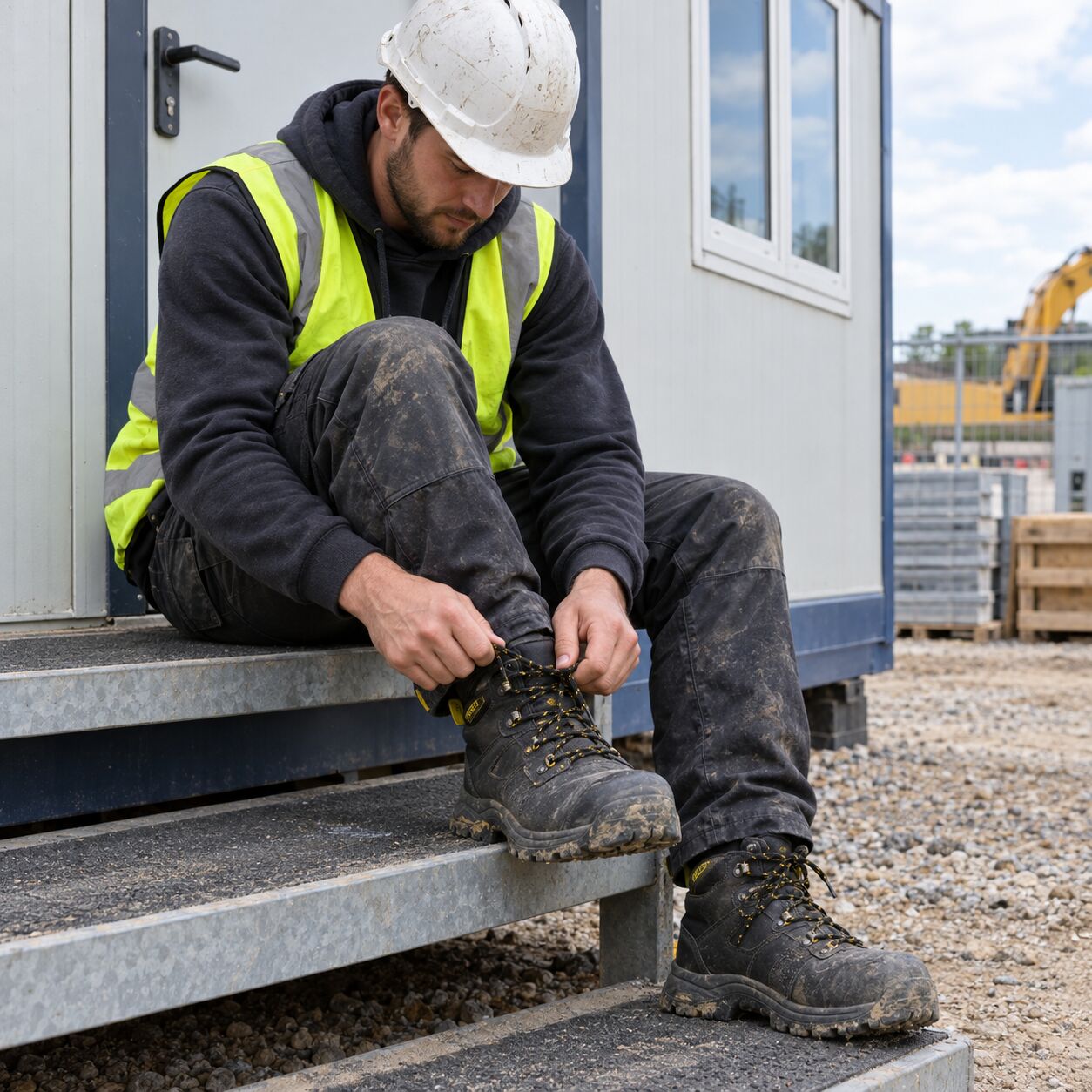
Begin with the hazards
Before comparing boots, identify what the job requires: protection from falling objects, sharp material underfoot, wet conditions or another specific hazard. Footwear must suit the task. HSE’s PPE guide describes footwear options for different risks.
Read the standard and the full code
Check the edition of EN ISO 20345 shown on the footwear, then read all the markings. The 2022 system introduced changes, including additional water-resistance classes and distinctions between penetration-resistant inserts.
- S1P: S1 properties with penetration resistance. The code does not establish whole-footwear water resistance.
- S3: includes upper water-penetration and absorption requirements, penetration resistance and a cleated outsole. It is not the same as whole-footwear water resistance.
- S7: builds on S3 with whole-footwear water resistance under the 2022 system.
Related markings such as S3L, S3S, S7L and S7S distinguish insert requirements. Use the complete marking and manufacturer’s documentation, not just a retailer’s short product title. See uvex’s guide to EN ISO 20345:2022.
Try the fit as a working setup
Try both boots with your usual work socks. Walk, bend and check that the heel is held comfortably and the toes have room. A higher protection category does not compensate for poor fit.
Check changes and wear
Before replacing insoles or adding accessories, check compatibility with the manufacturer. Inspect soles, uppers and fastenings regularly, and follow the care instructions. Replace damaged footwear according to the manufacturer’s guidance.
Valdito’s fictional footwear entries have no verified safety classification. Confirm the actual product documentation before selecting equipment for a real job.