What the class tells you
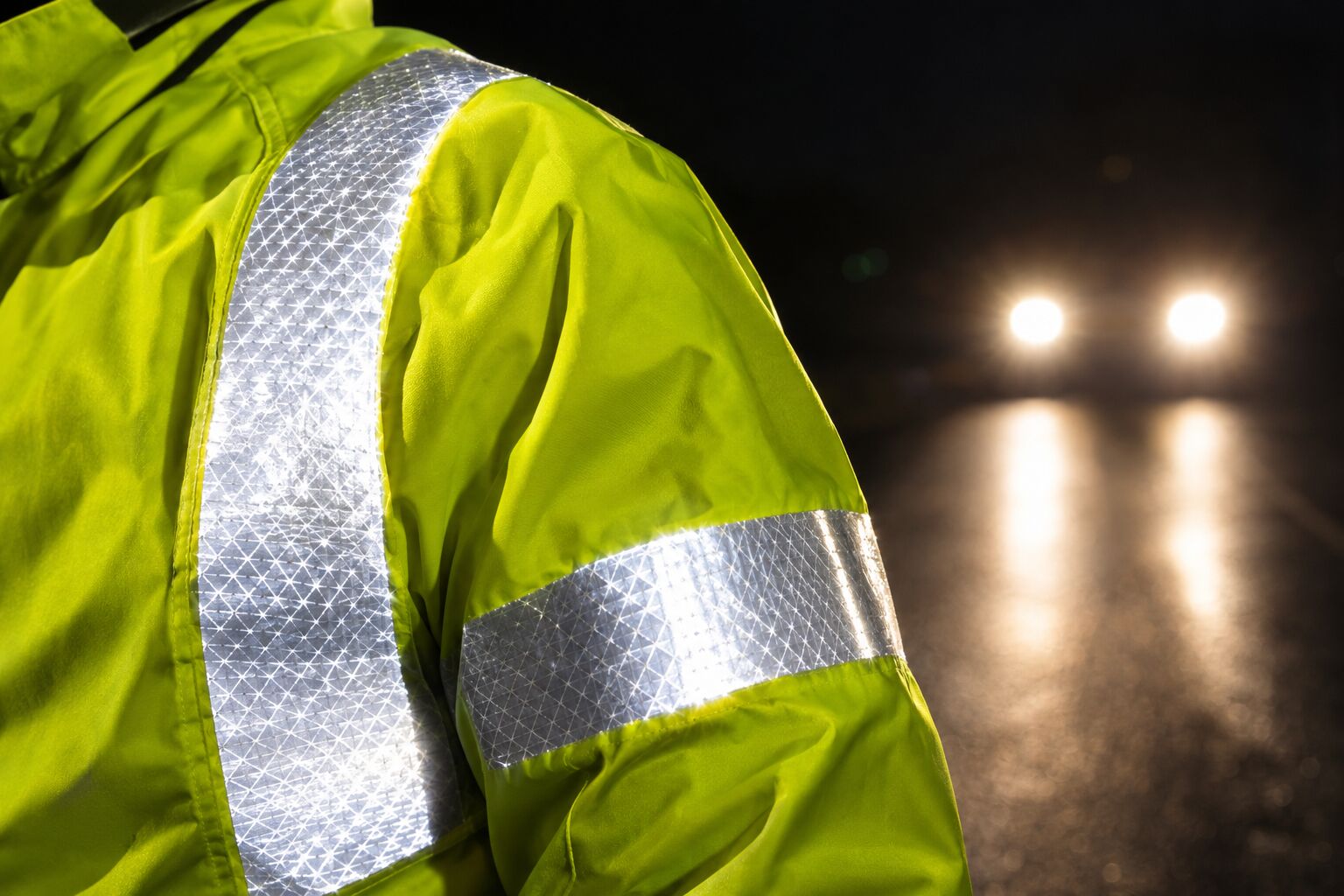
EN ISO 20471 groups high-visibility garments into classes 1, 2 and 3, with class 3 providing the highest level within the standard. Classification depends on the garment’s design and the areas of fluorescent and retroreflective material. A bright colour alone does not establish a class.
Read the label for the actual garment
Check the standard, class, size and manufacturer’s instructions for the item you will wear. Different sizes or versions of a design may have different classifications. Product photographs cannot tell you whether a particular item has been certified.
Combinations need their own evidence
A jacket and trousers may form a certified higher-class system, but only when the manufacturer identifies that specific combination. Do not add two class numbers together or assume any vest and trouser pairing qualifies. Tranemo’s visibility guide explains its certified garment systems and size-dependent classifications.
Choose for the working environment
The required visibility depends on the task, lighting, background and vehicle risks. Your site assessment should establish what is needed; the garment class is one part of that decision. HSE’s high-visibility guidance covers these selection factors.
Look after the visible surface
Keep required panels uncovered and follow the care instructions. Check for heavy soiling, damaged material and any limits the manufacturer places on washing or use. Ask the person responsible for site safety if you are unsure whether an item is still suitable.
The Valdito catalogue is illustrative: its product names and images are not evidence of EN ISO 20471 certification.